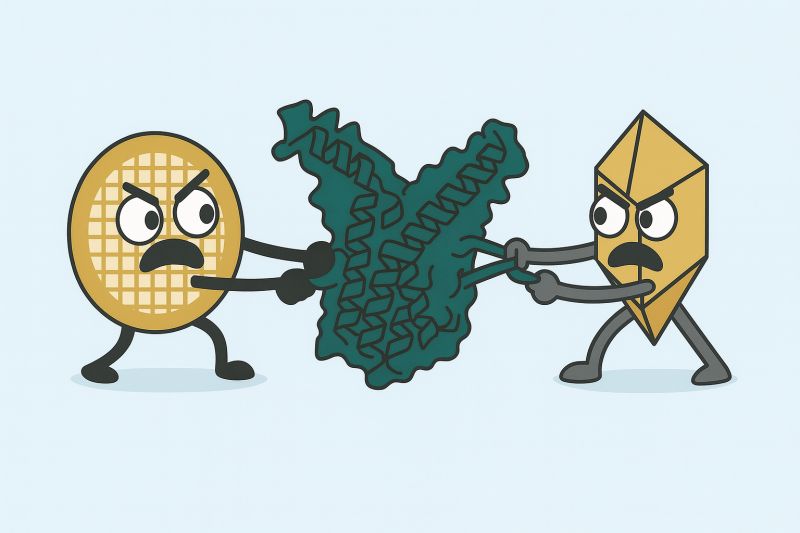
Is X-ray crystallography nearing the end of its era in membrane protein drug discovery?
With cryo-EM rapidly evolving and delivering atomic-resolution structures of membrane proteins that were once considered uncrystallizable, the field is shifting … fast. More and more we hear the statement “cryo-EM is the future for GPCRs, ion channels and transporters”.
But before we close the X-ray chapter, we should ask ourselves:
Is X-ray crystallography really out of the game?
We believe not at all. In fact, it may be entering a new phase.
Here are three reasons why X-ray is far from obsolete:
1️⃣ XFEL pushes the boundaries of what X-ray can do.
Serial femtosecond crystallography enables room-temperature measurements, captures dynamic states and eliminates radiation damage. It opens the door to time-resolved membrane protein studies at near-atomic resolution.
2️⃣ Integration with AI-driven design keeps crystallography powerful.
AI-guided protein engineering, including stabilizing mutations, construct design and crystallization optimization, dramatically lowers barriers to difficult targets. What once took months or years can now be accelerated even for challenging membrane proteins.
3️⃣ Unmatched scalability in fragment-based drug discovery.
For high-throughput ligand screening and precise structure-activity relationships, X-ray remains incredibly efficient and cost-effective. When speed, throughput and resolution matter, X-ray crystallography still delivers and integrates perfectly with biophysical screening pipelines.
Is X-ray crystallography nearing the end?